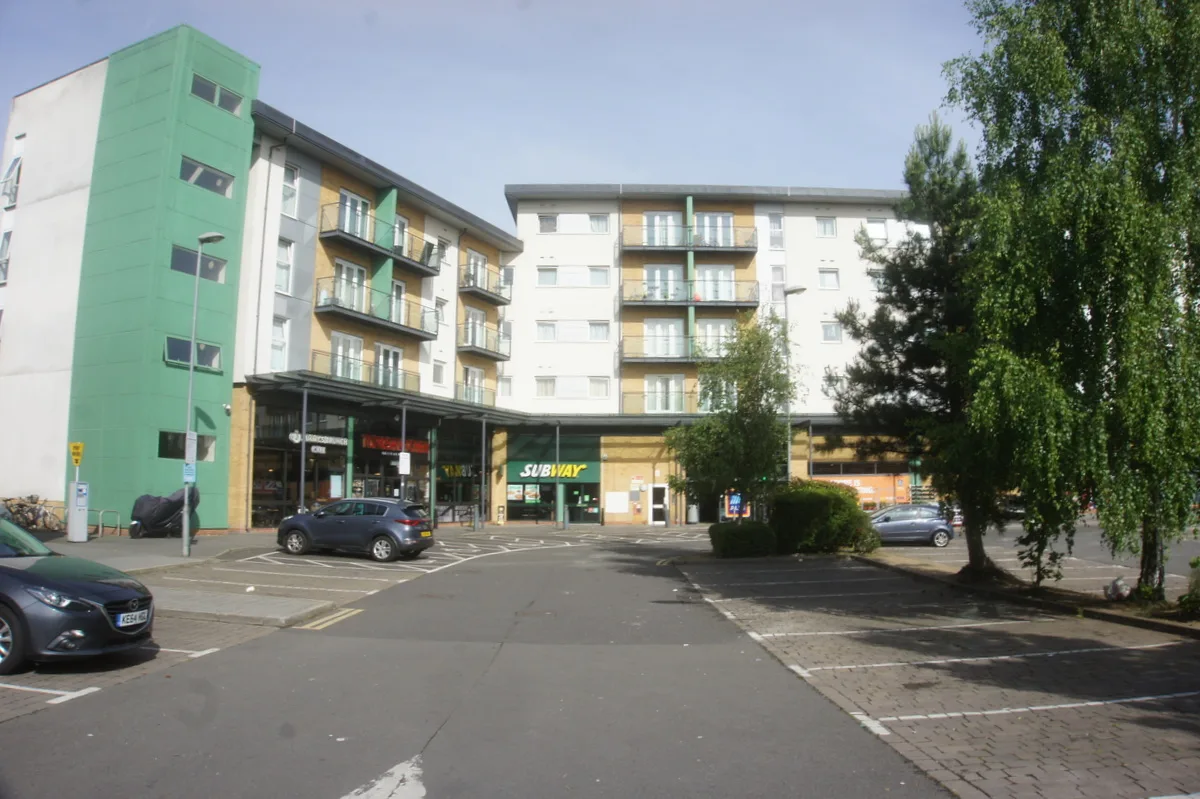

A new Public Spaces Protection Order covers Parkhouse Court in Hatfield from 24 August. Street drinking, begging and littering carry a £100 penalty for three years.
Drinking alcohol in the street, sitting on the ground to ask passers by for money and dropping litter will all be enforceable offences around Parkhouse Court in Hatfield from Monday 24 August, after Welwyn Hatfield’s Cabinet approved a Public Spaces Protection Order at its meeting on 11 August.
The order runs for three years, the maximum the law allows, and covers Parkhouse Court, Clarkson Court, Tamblin Way, Goldsmith Way and the Harpsfield Broadway frontage, as shown on the map attached to the order itself. Breaching it is a criminal offence carrying a fixed penalty notice of up to £100.
What the order actually bans
The seven prohibitions are set out word for word in the order. Inside the restricted area, a person must not:
- consume alcohol in a public place, or anything an authorised officer reasonably believes to be alcohol, if asked to stop
- be in possession of an open container of alcohol in a public place, and must hand it over if asked
- approach another person, by words or by actions, to beg from them
- loiter at or within ten metres of a cash machine, including those at banks, supermarkets and car parks, unless legitimately waiting to use it
- sit on the ground in a public place, street, highway or passage in a way that may be perceived as inviting people to give money
- urinate or defecate in a public place
- discard litter or waste anywhere in the area other than in a bin, specifically including bottles, cans, food, paper, chewing gum, cigarette butts and drug paraphernalia
The alcohol ban does not apply inside licensed premises or to pavement tables and chairs covered by a pavement licence. Enforcement sits with police officers, PCSOs and authorised council officers. Beyond the £100 fixed penalty, a prosecution for an alcohol breach carries a level 2 fine and any other breach a level 3 fine, which under section 122 of the Sentencing Act 2020 are maximums of £500 and £1,000.
Five years of reports behind the decision
The report to Cabinet sets out the police data the council relied on. Officers recorded 251 incidents in the Parkhouse Court area between 2022 and 28 May 2026. The count rose from 44 in 2022 to a peak of 78 in 2025, and reached 30 in the first five months of 2026, which the council says puts this year on course to match the peak.
When first reported, 150 of the incidents were logged as rowdy or inconsiderate behaviour, 37 as begging or vagrancy and 18 as drug related, with smaller numbers for noise, fireworks, trespass and abandoned vehicles. Once investigated, 180 were classed as nuisance, 44 as environmental and 27 as personal. The council says police have already used Community Protection Warnings and Notices heavily in 2025 and 2026 without shifting the pattern, which is the argument for adding fixed penalties to the toolkit.
What the consultation said
A statutory consultation ran from 1 July to 26 July and drew 126 respondents: 41% residents, 28% regular visitors, 15% local workers or businesses and 15% other, mostly parents of children at the nursery on the site.
Just over 92% supported the order, and 76% said the proposed area was about right. Asked which problems concerned them, 84% named street drinking, with 40% calling it severe; 78% named littering, 52% of them severe; 65% named begging; and 45% named public urination or defecation. Some respondents asked for the boundary to be extended along the alleyway towards David Lloyd, which the council decided against, keeping the order to the streets where the evidence sits.
Councillor Jane Quinton, executive member for environment, said in the council’s announcement of the consultation result on 3 August: “I am pleased that there is strong support for the introduction of a PSPO at Parkhouse Court.” Chief Inspector Chris Rutter of Welwyn Hatfield Police said the result “means officers will have more powers to deal with anti-social behaviour in the area”.
The part that is easy to miss
Most of the behaviour the order targets is associated with street drinking, begging and rough sleeping, and the council’s own equality impact assessment found potential negative effects on people by age, disability and ethnicity. The report commits officers to offering support first where someone in breach is vulnerable, through the ReStart rough sleeper service commissioned by the council and run by the charity Resolve, which also operates drug and alcohol services in both Hatfield and Welwyn Garden City. Fixed penalties are described as the last step, not the first.
This is the borough’s fourth such order. Welwyn Garden City’s town centre PSPO started on 1 April 2024, the High View order followed on 31 July 2024, and the Hatfield town centre order has been extended to the end of July 2027.
What it means for you
If you live, work or shop around Parkhouse Court: signage goes up before 24 August, which is the reason the council chose that date rather than making the order effective immediately. Breaches are reported to the police on 101, not to the council.
If you drink outdoors in the area: the alcohol prohibition bites when an authorised officer asks you to stop or to hand over an open container. Refusing is the offence. Licensed premises and pavement licence seating are exempt.
If you object to the order: the decision was a key decision subject to call-in, with a call-in deadline of 18 August 2026, and it takes effect on 19 August if no call-in is made. Separately, under section 66 of the Anti-social Behaviour, Crime and Policing Act 2014, anyone who lives in, regularly works in or visits the restricted area can challenge the order in the High Court within six weeks of it being made, on the grounds that the council lacked the power to make it or did not follow the statutory process.
If you are driving there: the ten metre cash machine rule applies to machines in car parks as well as at banks and shops. Our guide to roadworks, parking and travel across the borough sets out what the town centre car parks charge.
The full decision record is published on the council’s decision page for FP2263.
Have your say