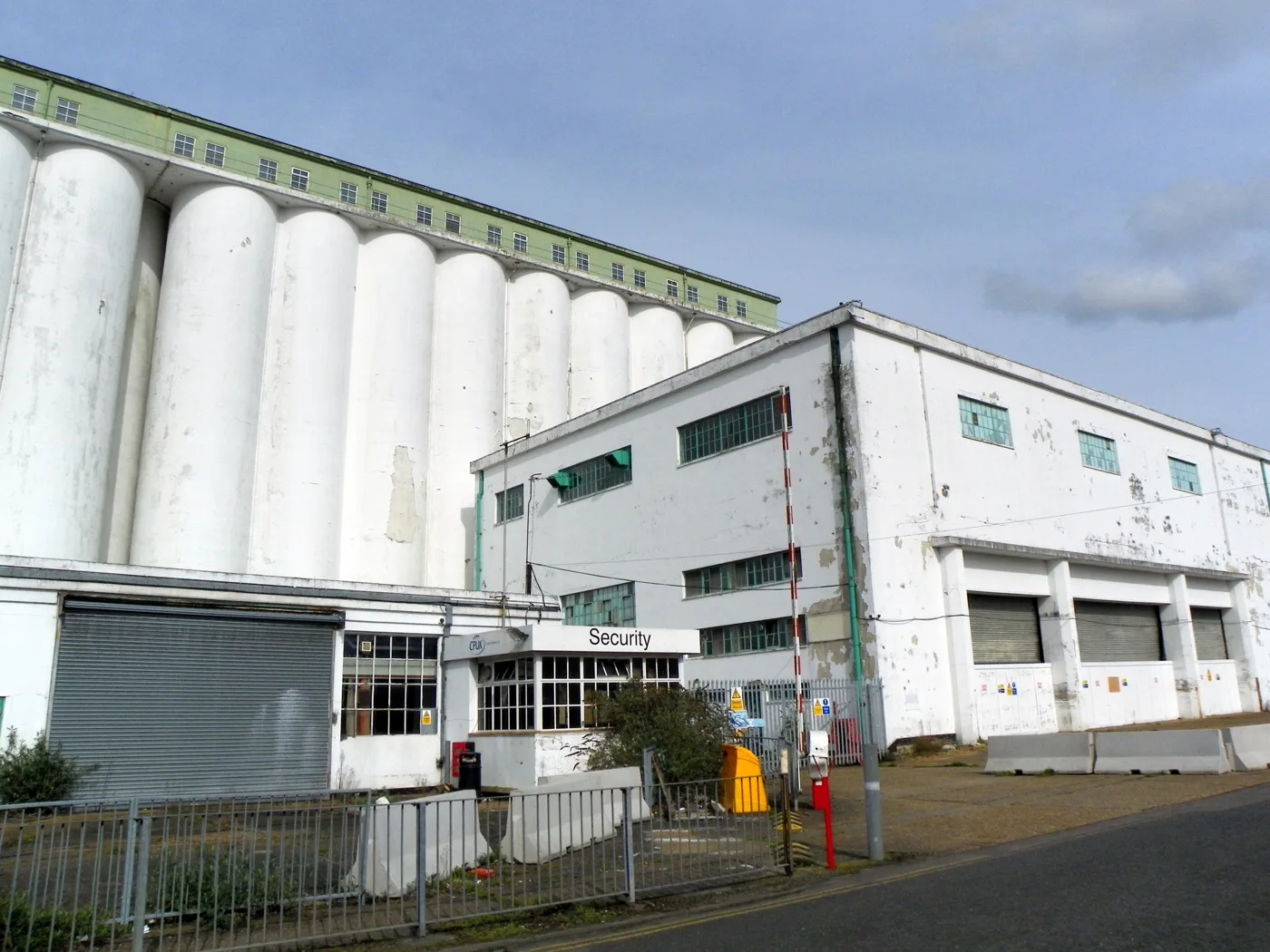

Permission for 578 homes at the old Shredded Wheat factory in Welwyn Garden City was issued on 9 October. None will be affordable; the silos will be restored.
The former Shredded Wheat factory in Welwyn Garden City now has full planning permission. Welwyn Hatfield Borough Council issued the decision notice for the Wheat Quarter on Friday 9 October. It covers 578 homes, a 180-room aparthotel and the restoration of the Grade II listed silos.
None of the 578 homes will be affordable housing. The council accepted that the scheme could not pay for any.
The planning register records application 6/2025/0321/MAJ as granted on 9 October. The linked listed building consent, 6/2025/1635/LB, followed on 13 October. The council announced the decision on 12 October.
Why it took eleven months
The Development Management Committee voted to approve the scheme on 18 November 2025, by 11 votes to 1, according to the minutes of that meeting. That vote was subject to a legal agreement, the Section 106, which sets out what the developer must pay for and deliver.
The signed Section 106 and the decision notice are now on the planning register. The permission carries 41 conditions. Work must begin within three years of 9 October.
The applicant is RMS (Welwyn Garden City) Limited. The council’s release names the developer as IJM.
What will be built
The officer report to the committee lists the scheme as:
- 133 houses
- 304 build-to-rent apartments, in blocks of 5 to 9 storeys
- a retirement living building of 141 units
- a 180-room aparthotel with a public café
- the silos restored, with a rooftop restaurant, a bar, co-working space and a climbing wall inside
- about 340 square metres of shops
- a secure cycle hub at the end of the footbridge from the town centre and station
- 2.6 hectares of public open space, including a new square
- 388 car parking spaces and 13 car club spaces
The footbridge from Bridge Road, owned by Network Rail, will be shortened. A new building at its eastern end will carry stairs, a lift and a public viewing platform.
The Production Hall comes down
The scheme demolishes the Grade II listed Production Hall and a chimney near the silos. Twenty-five three-storey townhouses will be built roughly on its footprint.
The officer report records that a condition report found the hall beyond viable re-use. It cites an estimate of around £20 million to restore it. A heritage condition means no one can move into that part of the site until the council has approved a “Heritage Interpretation Strategy”, with public art and displays telling the site’s story.
No affordable homes
Welwyn Hatfield’s Local Plan asks for 30% affordable housing on this site, subject to viability.
The developer’s viability assessment said a scheme of entirely market homes would run at a deficit of £71.2 million. The council’s own consultants, Aspinall Verdi, checked it and put the deficit at £67.4 million. On that evidence, officers concluded the scheme could provide no affordable homes and still comply with policy, because the policy is “subject to viability”.
The Section 106 includes early and late-stage viability reviews and a review if the development stalls. If the scheme turns out more profitable than forecast, any surplus goes first to affordable housing.
For comparison, the 2019 permission for the whole site, 6/2018/0171/MAJ, allowed up to 1,340 homes, 414 of them (31%) affordable. Only two blocks of affordable homes at the southern end were built.
Where the £2.99 million goes
The scheme pays £2,994,848 in Section 106 contributions, according to the officer report. The developer’s viability assessment set that figure pro rata, at about 40% of the obligations on the earlier consent.
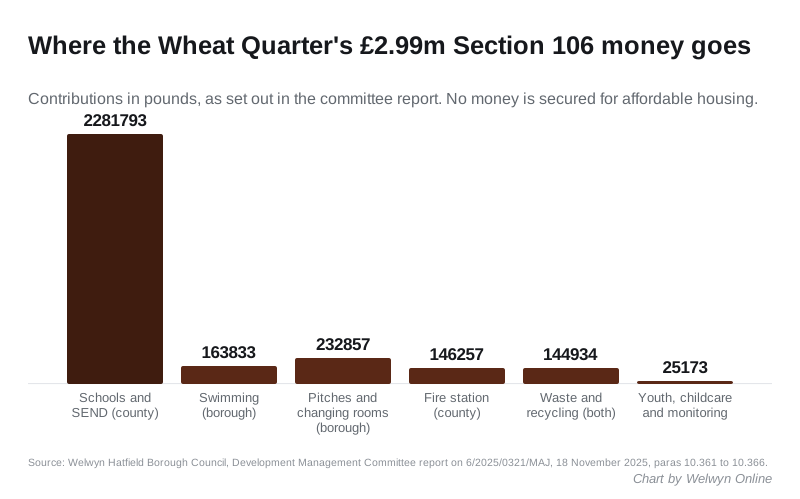
The biggest items are:
- £2,281,793 to Hertfordshire County Council for nursery, primary, secondary and SEND places
- £163,833 towards swimming: new provision in the borough, a rebuilt Hatfield Swim Centre, or repairs there or at the University of Hertfordshire
- £146,257 towards expanding Welwyn Garden City fire station
- £232,857 in total for pitches and changing rooms, at sites including Moneyhole Lane Park, King George V playing fields, Welwyn Rugby Club and a possible new 3G pitch
- £144,934 for waste and recycling, split between the borough and the county
The rest covers youth work (£12,608), childcare places at Squirrels Day Nursery or Peartree Primary School (£7,565) and the council’s £5,000 monitoring fee.
Roads around the site
Condition 13 requires highway works on Broadwater Road, Bridge Road, Bridge Road East, Bessemer Road and the Hyde Way junction. They must be approved before building rises above slab level. Condition 14 says they must be finished before anyone moves into the 200th home.
What it means for you
- If you live near Broadwater Road: nothing starts yet. The developer must first get approval for a construction traffic management plan, covering lorry routes and working hours, before work begins on each phase. Those submissions will appear on the planning register as condition applications.
- If you were hoping for an affordable home here: there are none in this permission. Only the viability reviews could change that.
- If you use the station footbridge: it will be rebuilt with a lift at the Wheat Quarter end. No dates have been published.
Councillor Rose Grewal, Leader of the Council and Executive Member for Planning, called it “a major milestone for Welwyn Garden City” in the council’s release.
The draft Local Plan, out for consultation until 5 November, lists Broadwater Road West, which covers the former factory and the Bio Park, for 1,300 homes. Our Local Plan story explains how to respond, and our planning news page tracks the borough’s other big schemes.
Have your say